

NASA Innovations Boost Medical Advances with Space Technology
Houston, Thursday, 16 January 2025.
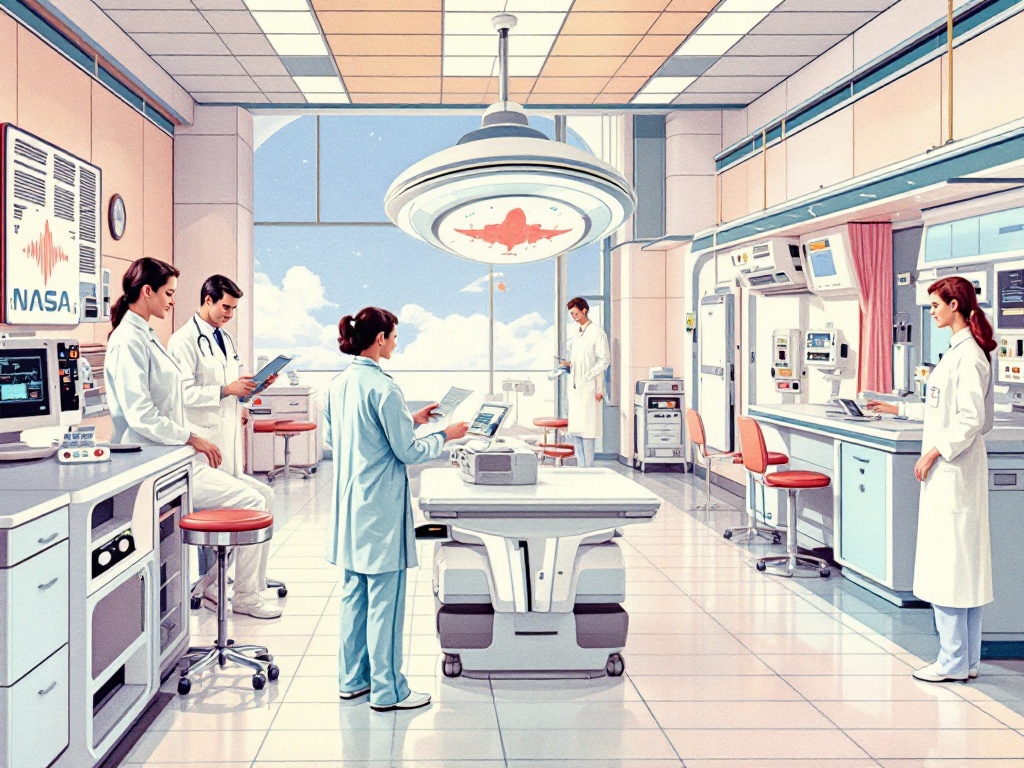
NASA’s space-based technologies, like laser tracking, are enhancing healthcare innovations, offering significant potential for improving diagnostics and treatments through cross-industry technological applications.
Space-Induced Health Challenges Drive Innovation
The harsh environment of space has pushed NASA to develop groundbreaking medical solutions that are now finding their way into everyday healthcare. Astronauts face severe physiological challenges, including up to 30% muscle mass loss and 8-12% bone density reduction during spaceflight [1]. These space-specific health issues, along with conditions like Spaceflight Associated Neuro-Ocular Syndrome (SANS), have catalyzed the development of advanced medical technologies that are now being adapted for terrestrial use [1].
From Space Station to Hospital Innovations
The International Space Station (ISS), continuously inhabited since November 2000, has served as a crucial platform for medical research and technological advancement [2]. These developments have significantly contributed to medical innovations and commercial industry growth [2]. As NASA transitions to new operational models, the focus on healthcare innovation remains strong, with particular emphasis on developing technologies that can benefit both space exploration and terrestrial medicine [2].
Technology Transfer and Healthcare Integration
NASA’s technological breakthroughs, including laser tracking systems originally designed for ballistic missiles, are finding new applications in medical procedures [1]. Additionally, recent developments showcased at CES 2025 demonstrate how space-derived technologies are being integrated with current medical innovations. For instance, non-invasive health monitoring systems, similar to Abbott’s Lingo glucose monitor priced at $50, represent the kind of accessible healthcare technology that benefits from space research [3].
Future Implications for Healthcare
As NASA adapts its space station operations and moves towards commercial platforms [2], the pipeline for medical innovation continues to evolve. The focus on biopharma and advanced medical products in future commercial space stations suggests a new era of space-based medical research [2]. These developments, combined with emerging technologies in AI and robotics showcased at recent technology exhibitions [3], indicate a transformative period in healthcare innovation driven by space technology [alert! ‘specific future medical applications beyond 2025 are speculative’].